Résultat du Prix du Meilleur Article Etudiant
PRIX AEE DU MEILLEUR ARTICLE ETUDIANT EN ÉCONOMIE DE L’ÉNERGIE DECERNE PAR LA FAEE
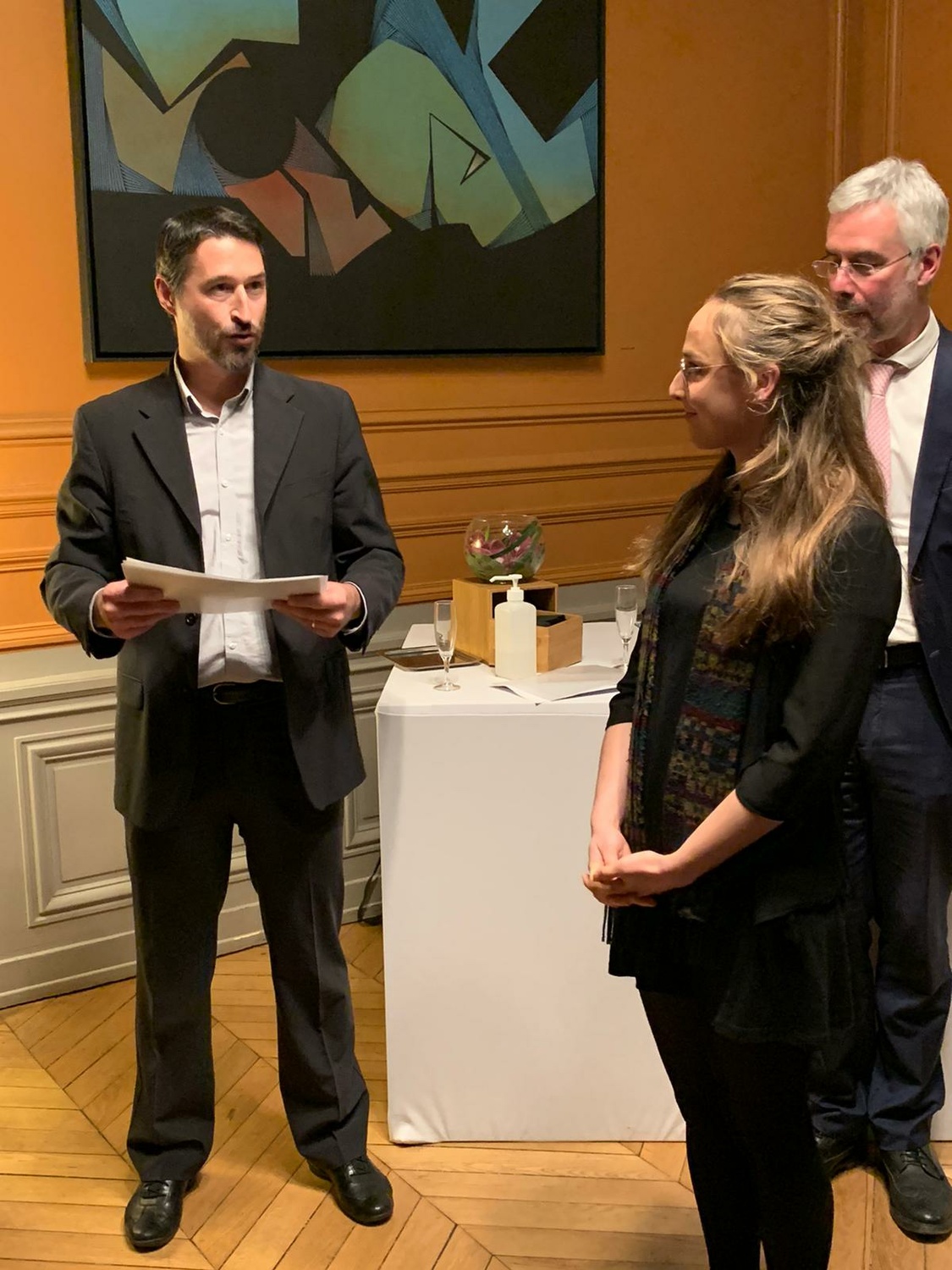
A l’issue d’un processus de sélection rigoureux, les neufs meilleurs articles d’étudiants sont présentés dans le cadre d'un séminaire à l’université de Grenoble. Deux prix sont ensuite décernés par le jury de l’AEE. Outre cette distinction, un chèque de 1000 euros est remis au meilleur article de l’année 2021 et un chèque de 500 euros est décerné au second article.
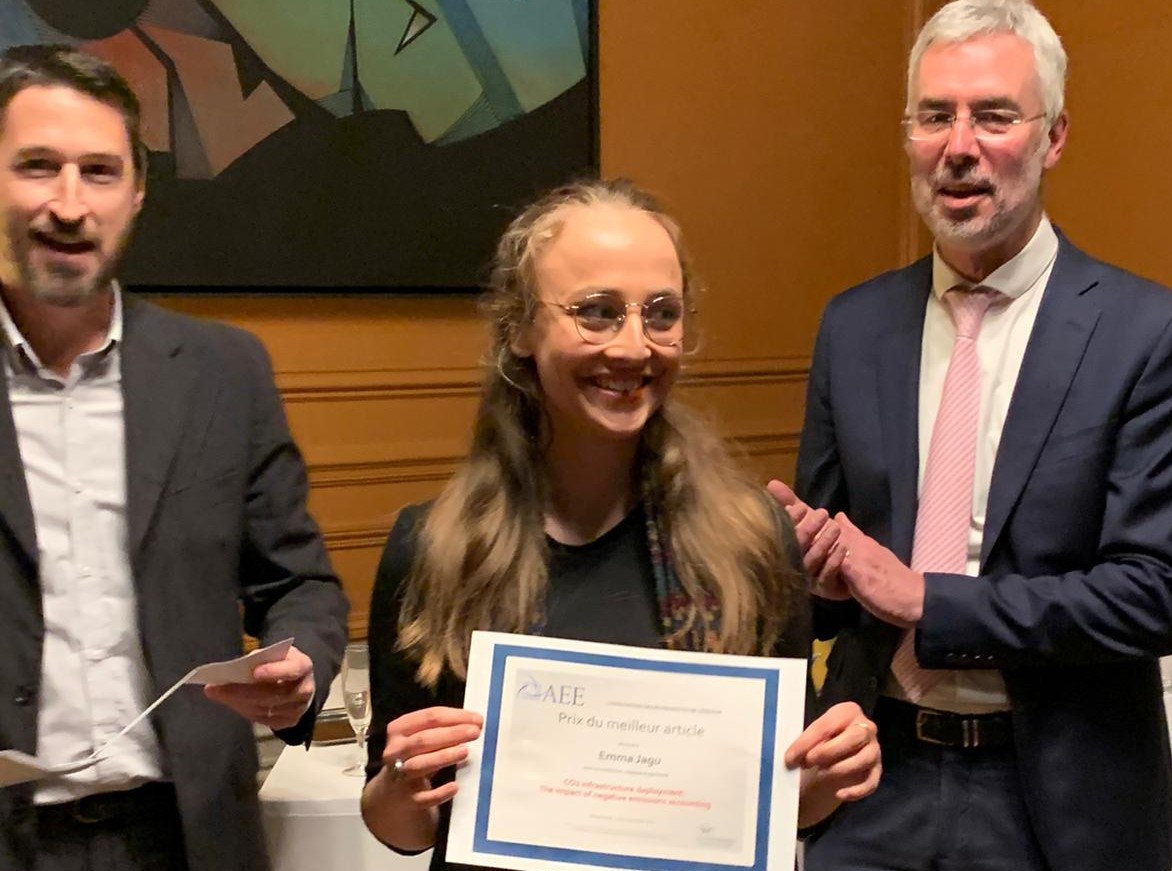
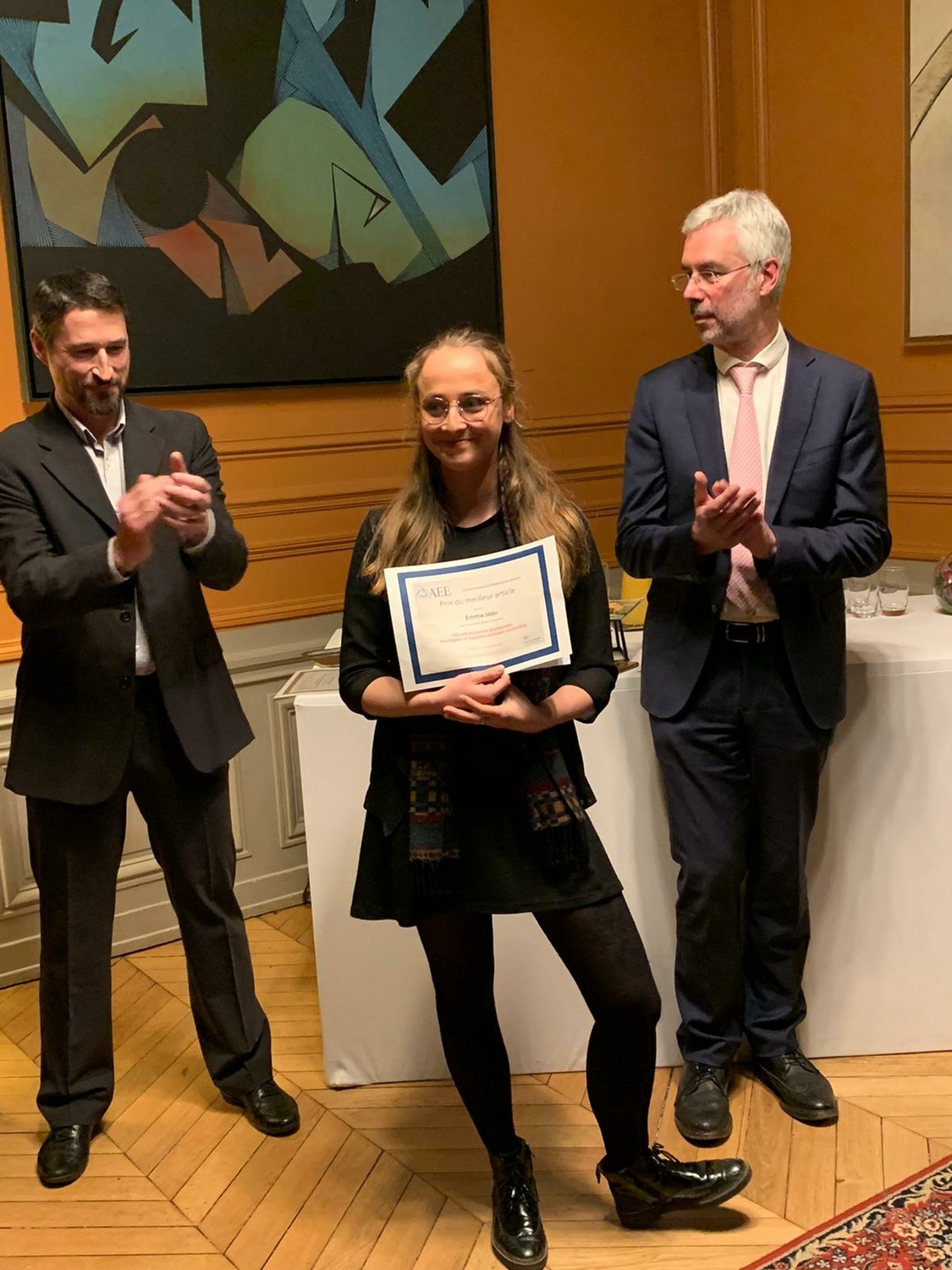
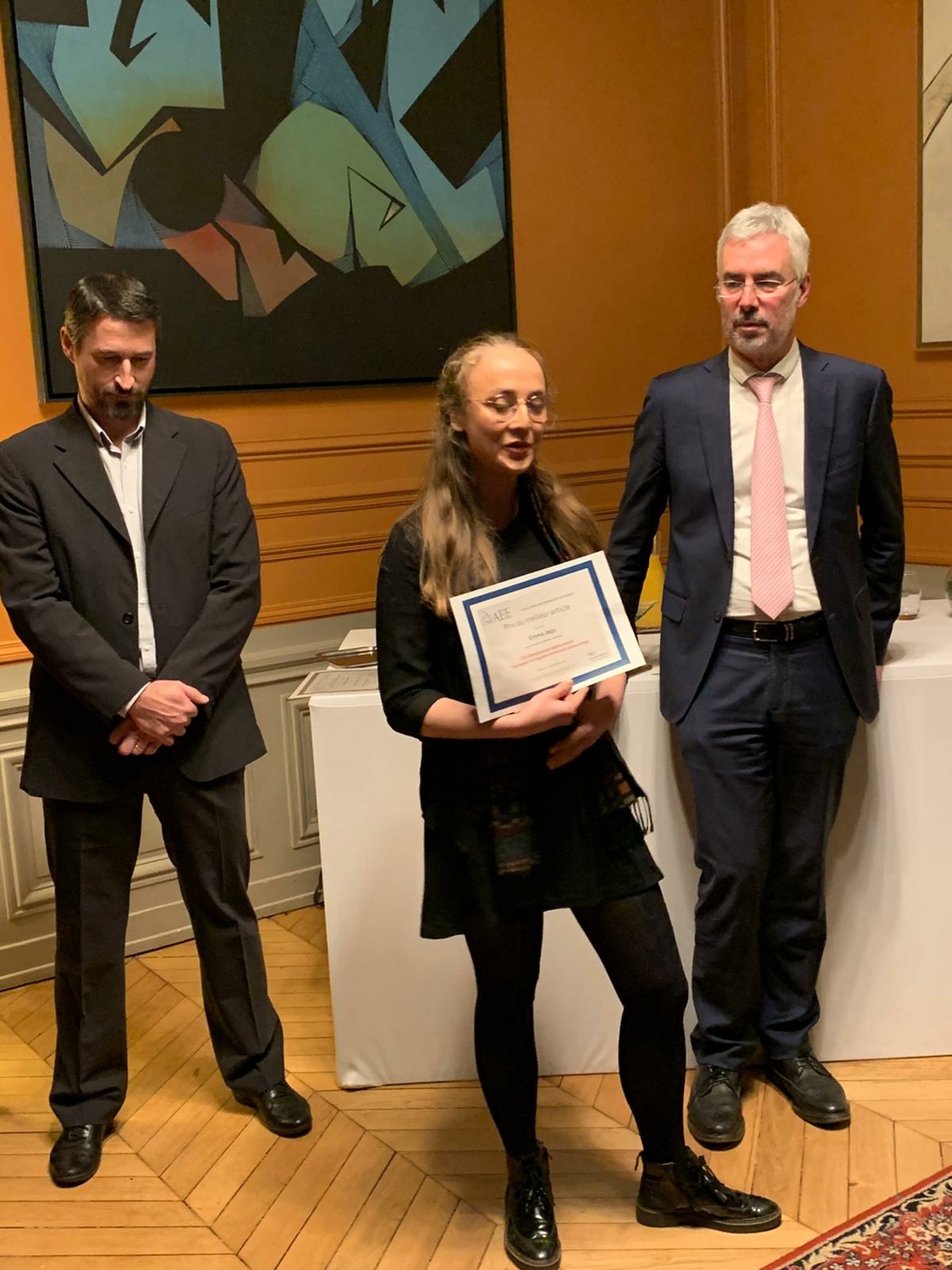
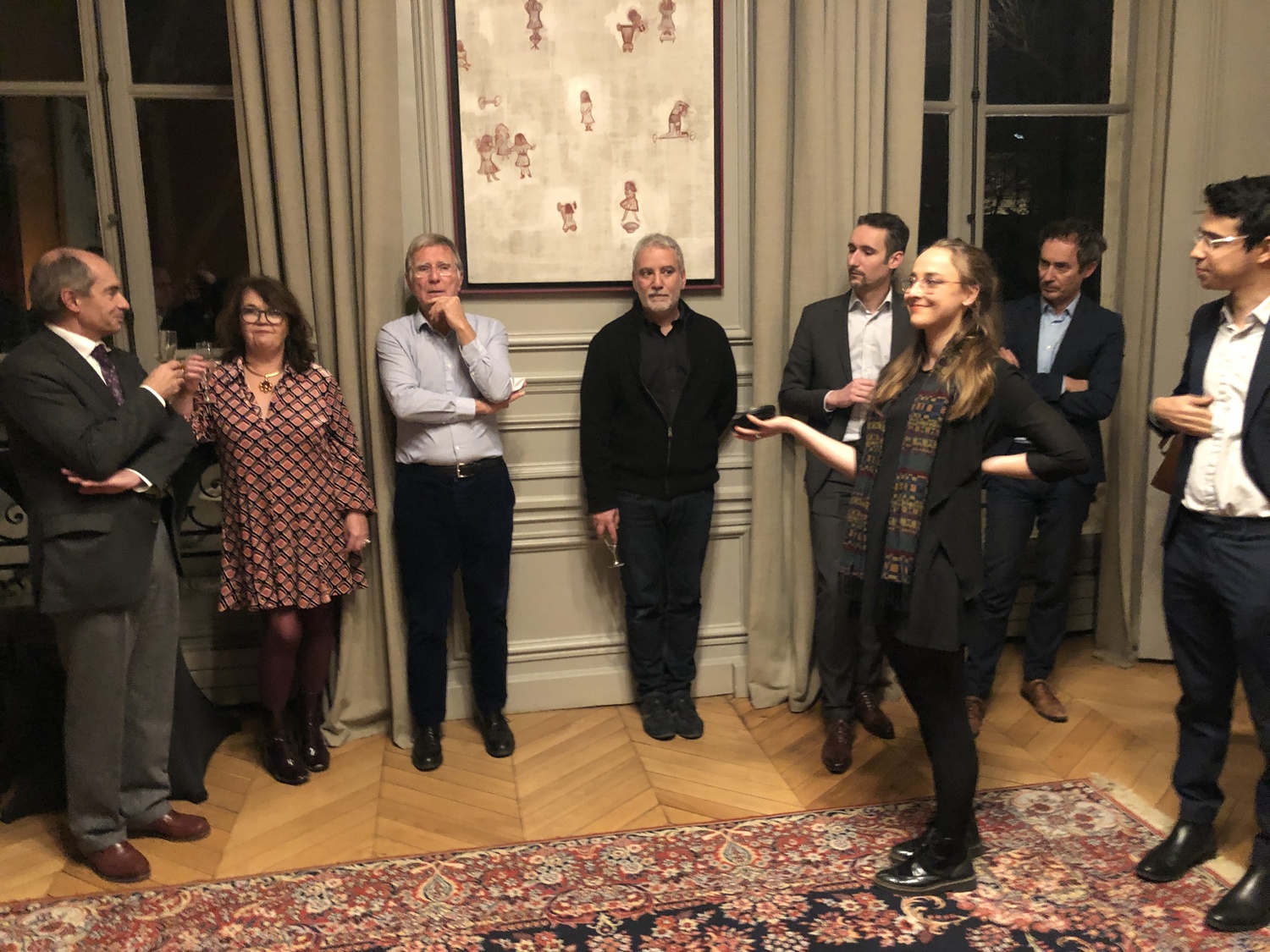
Le Jury a cette année donné le premier prix à : Emma Jagu (IFP School (Chaire CarMa) - LGI CentraleSupélec), pour son papier : « CO2 infrastructure deployment: The impact of negative emissions accounting ».
Abstract
Bioenergy with Carbon Capture and Storage (BECCS) is a promising process to remove CO2 from the atmosphere, and Fossil-energy with Carbon Capture and Storage (FECCS) could mitigate emissions from otherwise hard-to-decarbonize sectors. However, the upscaling of BECCS and FECCS requires the deployment of CO2 infrastructures that are costly, capital intensive, and likely to exhibit substantial economies of scale. This paper examines the deployment of shared CO2 infrastructures between BECCS and FECCS emitters.
We highlight that bioenergy is often considered carbon-neutral. Therefore, robust CO2 removal accounting frameworks have to be agreed upon to incentivize BECCS investment. We assess the influence of CO2 removal accounting on optimal CO2 infrastructure deployments by considering two scenarios: (i) a myopic scenario, where each ton of captured CO2 emissions at a BECCS plant is considered as CO2 removal, and (ii) a life-cycle scenario, where process emissions are deduced from the amount of CO2 that can be considered as removal.
We apply our model to a large contemporary BECCS/FECCS case study in Sweden. Our results indicate that Carbon Capture and Storage (CCS) can be implemented if the value of CO2 is high enough. In the myopic scenario, a shared infrastructure is built at 99€/tCO2. In the life-cycle scenario, the CO2 infrastructure is built for FECCS only at 115€/tCO2. Bioenergy-fueled emitters start investing in carbon capture at 222€/tCO2. Hence, BECCS plants may be excluded from CO2 transportation infrastructures that are designed and constructed for FECCS before investments in BECCS become viable. These results illustrate that a policy trade-off must be found between accurately evaluating CO2 removal and avoiding BECCS lock-out.
Le second prix est pour le papier intitulé : « Long-term issues with the energy-only market design in the context of electricity decarbonization: Insights from a system dynamics simulation model” qui a comme auteur principal Alexis Lebeau (EDF R&D et LGI CentraleSupélec).
Abstract
Decarbonization of energy systems is challenging but needs to happen. Despite a rich literature on energy transitions and electricity markets, there is a scant literature analyzing (1) how an energy-only market (EOM) design may yield energy mix trajectories that are compatible with decarbonization objectives and (2) the role of underlying investor behavior assumptions. This paper intends to bridge this gap and illustrate both aspects through electricity market model simulations. We study an illustrative case inspired by the Californian power system and highlight two main findings. First, an EOM complemented with a carbon price signal can reproduce the optimal mix trajectory but required assumptions are demanding and unrealistic (e.g. perfect rationality, full information about fundamentals, perfect coordination between decommissioning and investment decisions). Second, we characterize how the EOM-induced mix trajectory can considerably deviate from optimality when we relax these assumptions. We conclude that the desirable theoretical properties of an EOM are not robust to practical investor behaviors. Meeting decarbonization targets thus calls for a change in market design paradigm toward hybrid markets that combine a dedicated long-term investment module with short-term wholesale markets as we know them today.